

Menu
Section: What were the ghettos and camps?

Case Study: Treblinka

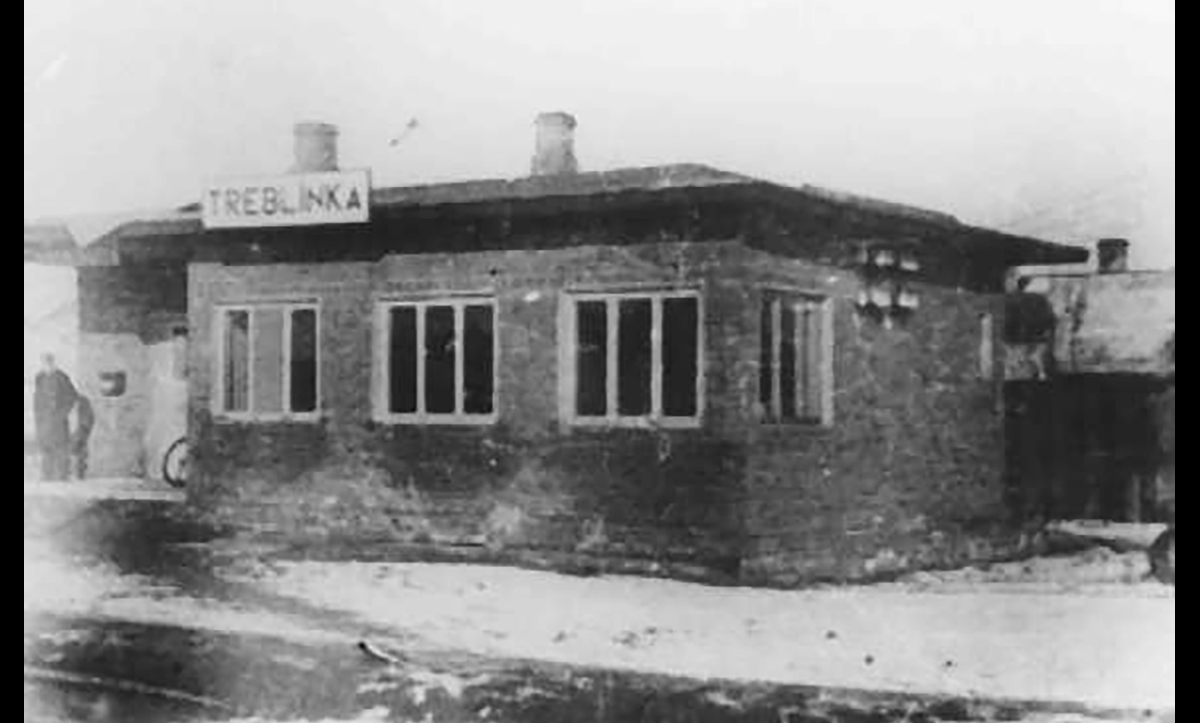
Train station near the Treblinka extermination camp found in the photo album of the final Treblinka camp commandant, Kurt Franz, c. August-November 1943.
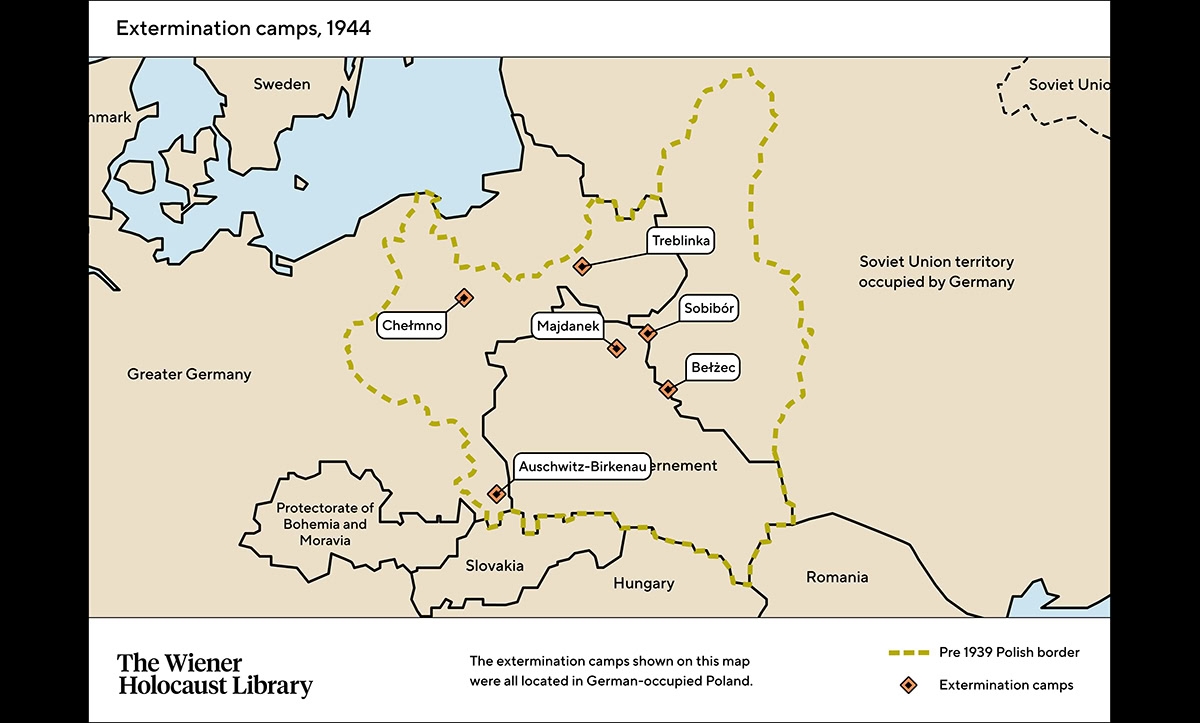
Map of Operation Reinhardt extermination camps in German-Occupied Poland in 1942, including Treblinka in the north.

Treblinka was one of the three Extermination camp located in the German-occupied area of Eastern Poland created by the Nazis as a part of Operation Reinhardt . It was the third and final of three Reinhardt extermination camps to become operational. It opened in July 1942, several months after both Belzec and Sobibor.

The extermination camp was made up of three sub-camps, including an Auffanglager (reception area), a Totenlager (death area) and a Wohnlager (living area). The reception area was where Jews who were deported to Treblinka for extermination arrived in the camp. It is where they undressed and where other Jews who were forced to work in the camp sorted their clothing.

The reception area was connected to the death area by a fenced in walkway which led to the gas chambers. Jews who were forced to work in the gas chambers also lived in barracks in the death area. The living area including the barracks and administrative buildings used by the German SS personnel and Ukrainian auxiliary guards who oversaw and guarded the camp.

Around 800,000 people were murdered in gas chambers in Treblinka, mostly Polish Jews but also a small number of Roma and Sinti. The final group of Jews to be murdered in the gas chambers arrived in August 1943, after which the camp was shut down. Treblinka was the second most deadly extermination camp for Jews, behind Auschwitz-Birkenau.
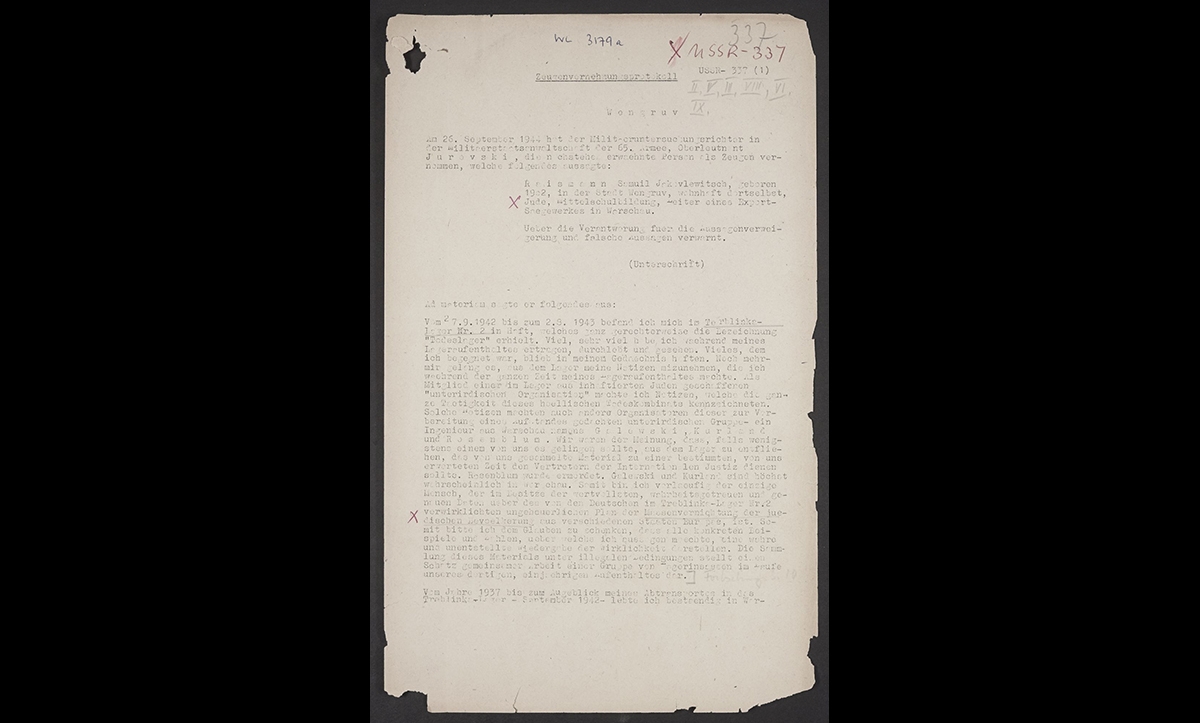
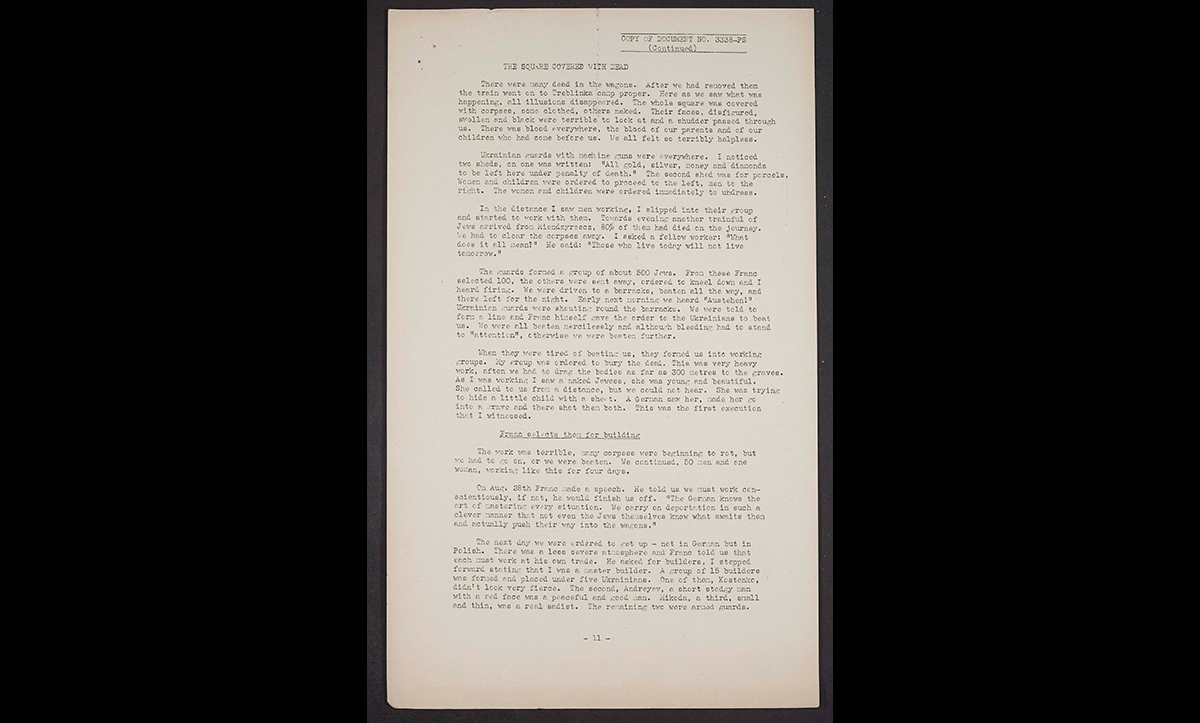
Conditions inside Treblinka

As Treblinka was an extermination camp, almost all Jews transported to the camp were murdered in gas chambers immediately or shortly after arrival. Prisoners were forced to strip, women had their hair shaved and were forced to run from the reception area directly into the gas chambers. Sometimes, before entering the gas chambers, women suffered sexual violence at the hands of the SS men overseeing the process.

There was a small group of prisoners who were spared death in the short term. These prisoners, referred to as Arbeitsjuden (work Jews) were forced to carry out all the labour necessary for the camp to operate. This included prisoners who performed skilled labour, like carpentry or sewing, in the living area, and manual labour, like guiding new arrivals off trains or sorting the clothing of the murdered in the reception area.

It also included Jews selected to be in the Sonderkommando, or the special detachment of workers who were forced to assist in the murder of other Jews as well as in the disposal of their bodies. Members of the Sonderkommando were isolated from all other prisoners. They lived and worked in the death area, and were not allowed to speak to those who worked in other reception areas.

For all Jews forced to work in Treblinka, mostly men but also a small number of women, survival was not expected. Even if a prisoner could survive the combination of poor living conditions, lack of proper nutrition and disease, carrying out labour which assisted in the process of mass murder meant that the SS intended to kill these Jews eventually as well. Like in other Reinhardt camps, prisoners were subject to a wide variety of punishments for the smallest breach of camp rules, including ‘sports activities’ where prisoners were forced to run in circles while being whipped.

Surviving as a forced labourer in Treblinka was difficult. In total, approximately 150 Jews survived the camp, including seventy of whom escaped during the Treblinka Uprising.


Treblinka Uprising

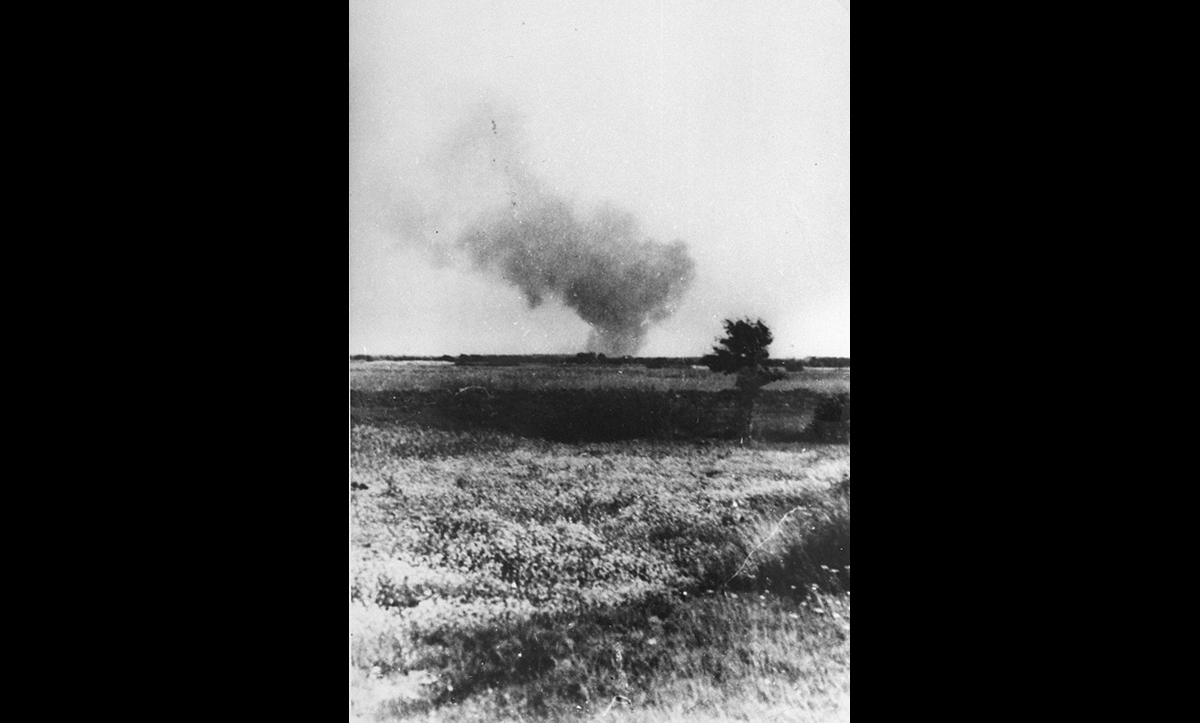
Smoke over Treblinka extermination camp after part of the camp was set ablaze during the camp uprising on 2 August 1943, captured by a railway worker.

Smoke over Treblinka extermination camp after part of the camp was set ablaze during the camp uprising on 2 August 1943, captured by a railway worker.

Courtesy of the Bildarchiv Preussischer Kulturbesitz via USHMM Holocaust Encyclopaedia.

In early 1943, as the camp began to wrap up its extermination activities, Jews inside the camp feared they would soon be killed. In response, they organised a resistance network within the camp.

On 2 August 1943, this network led a revolt. Prisoners unlocked the camp armoury with a duplicated key and took a number of rifles, hand grenades, and pistols. Around 3:45 in the afternoon, some 700 of the 840 prisoners in the camp took part in the revolt. Buildings were set afire while a majority of the prisoners stormed the camp gate. Hundreds were killed by the return gunfire of the SS men and Ukrainian auxiliary guards; however, around 200 were able to escape. Although around 100 of these escapees were later recaptured and murdered, approximately seventy managed to remain free and survive the war.

Aftermath and Camp Closure

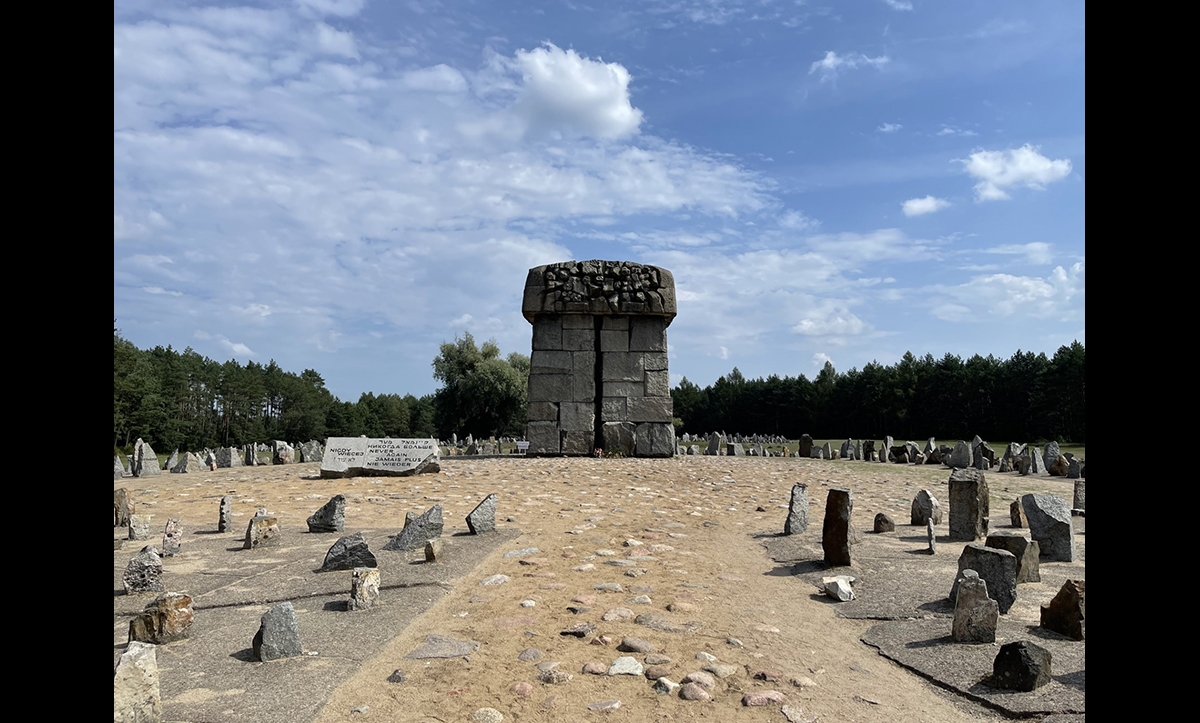
The Treblinka Memorial in June 2022. The large stone structure is located on the spot where the ‘new’ gas chambers stood. These eight to ten new gas chambers were built between August and September 1942 after the ‘old’ three gas chambers were deemed inefficient to the killing process.

The Treblinka Memorial in June 2022. The large stone structure is located on the spot where the ‘new’ gas chambers stood. These eight to ten new gas chambers were built between August and September 1942 after the ‘old’ three gas chambers were deemed inefficient to the killing process.

Photo courtesy of William Ross Jones.

The final sixty-eight train cars of Jews to be murdered in Treblinka arrived on the 18 and 19 of August, two weeks after the uprising. After these last Jews were murdered in the gas chambers, the camp was dismantled. This work was carried out by about 100 Jewish prisoners in September and October of 1943.

After the Sobibor extermination camp uprising on 20 October, about half of these men were sent to Sobibor to dismantle the extermination camp there. The remaining Jews at Treblinka lived in the camp and continued working until mid-November, when they were then shot and killed.

Continue to next topic
Treblinka Uprising

Treblinka Uprising

What happened in February