

Menu
Section: Life before the Holocaust

Pre-war Jewish life

A map showing the distribution of the Jewish population of Europe in 1933.
Wolfgang Josephs (later known as Peter Johnson) and his father in 1920.
Alfred Joesphs with his brother-in-law before the Second World War.

Prior to the Holocaust, there were thriving Jewish communities across the world.

The largest Jewish populations were located in Eastern Europe, with communities numbering 3,000,000 in Poland, 2,525,000 in Russia, and 980,000 in Romania. In many large Eastern European cities and towns, such as Warsaw in Poland, Jews fully embraced their country’s culture while also observing traditional Jewish customs. In Western Europe, there were also many sizeable Jewish communities, with 300,000 Jews living in Britain, and 565,000 living in Germany, for example. Here, most Jews were  assimilated into the culture of the country in which they lived.

However, not all of Europe was as assimilated, or partially assimilated, as Western Europe and the larger towns and cities of Eastern Europe. Cultural separation was more apparent in rural areas of Eastern Europe, such as Poland and Russia. Here, small towns or villages called ‘Shtetls’ were comprised mainly of Jews. In Shtetls, people aimed to live a simple, traditional, life focused around religion, community, and family.

After the Nazis came to power and antisemitism intensified, Jewish life in Europe changed forever. This section explores pre-war Jewish life in Eastern Europe, including language, politics and culture. It also uses case studies to demonstrate the diversity of pre-war Jewish life.
Yiddish

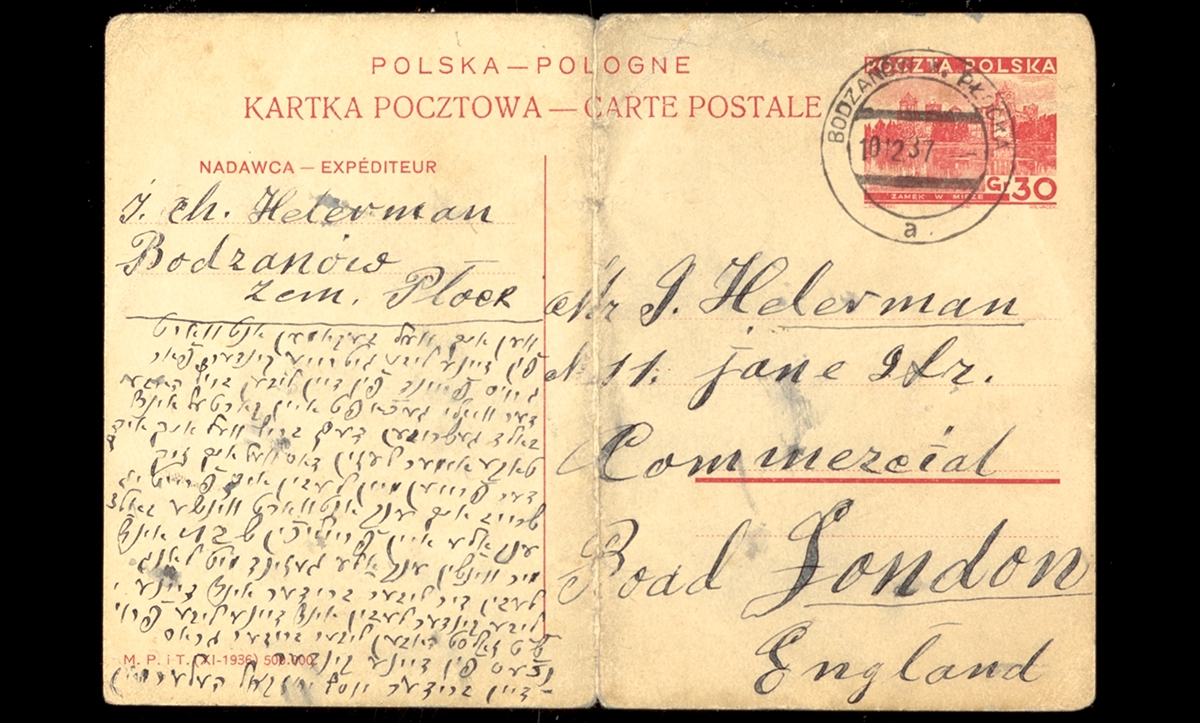
Yiddish is a language that was historically spoken by Ashkenazi Jews.

In traditional Eastern European Jewish society, Yiddish was one of three Jewish languages. It was the everyday spoken language; the others, Hebrew and Aramaic, were reserved for religious settings and study.

Although Yiddish is written with the Hebrew alphabet and includes many Hebrew words, particularly relating to religious themes, itis its own distinct language. It has a large Germanic influence as it developed in medieval German lands when Jewish communities first settled there. Later, when these communities moved to Eastern Europe, Slavic components were added.

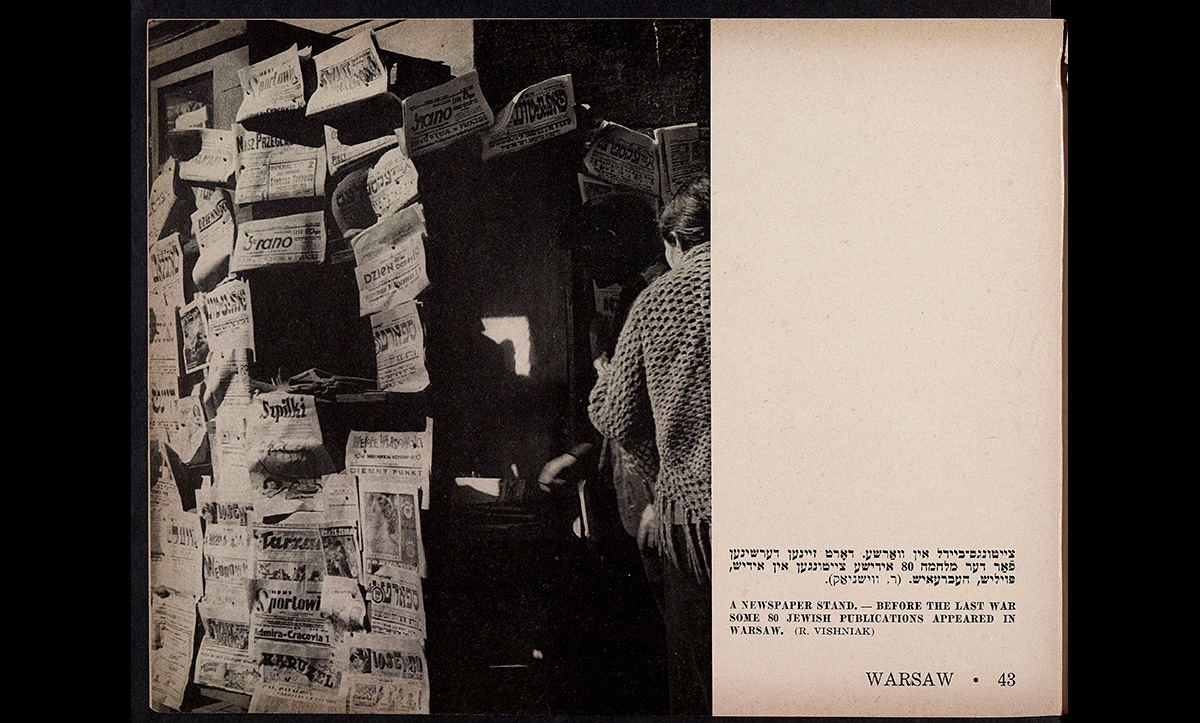
In the eighteenth century, Yiddish was dying out in Western Europe due to growing assimilation. Western European Jews considered it a backwards language, unsuitable for modern Europe. At the same time, it was flourishing in Eastern Europe where it influenced and was sustained by a rich Yiddish culture, including theatre, poetry, music and education.

There were approximately thirteen million Yiddish speakers on the eve of World War II.


The Shtetl

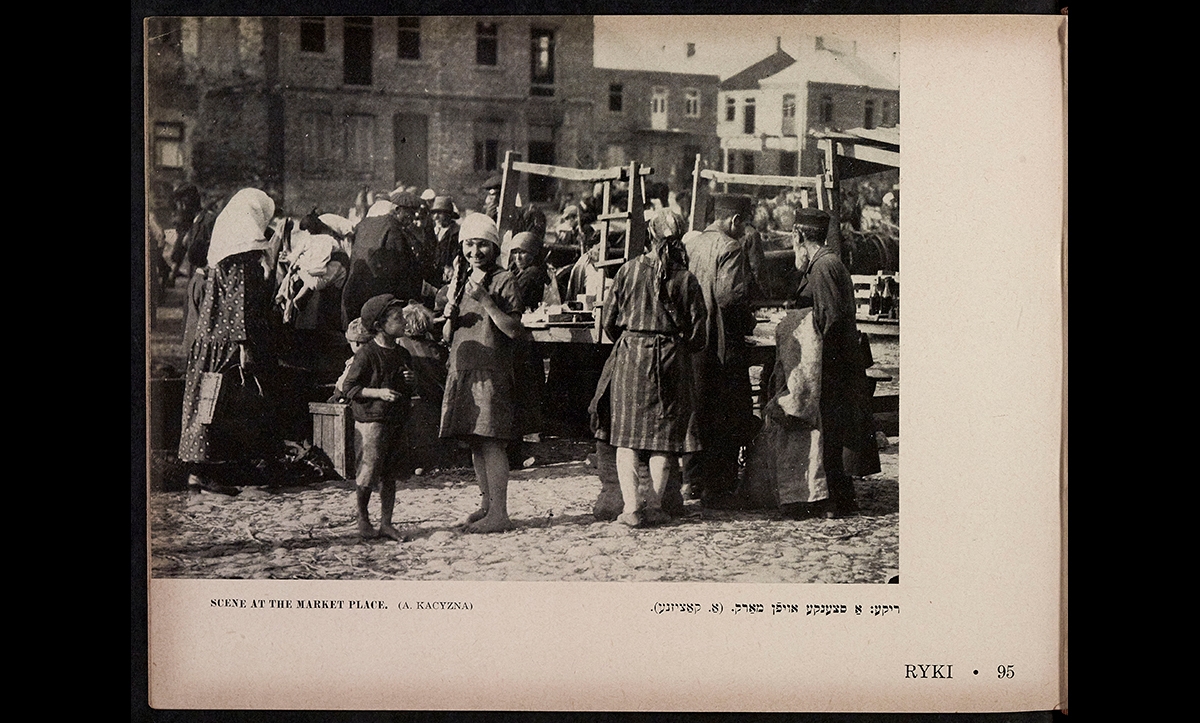
Shtetl is the Yiddish word for town. Shtetls or shtetlach  were distinct, small market towns in Eastern Europe made up of predominantly Jewish populations. Shtetl life had a very large impact on the development of Jewish culture.

Shtetls developed in Eastern Europe in the old Polish-Lithuanian Commonwealth in the sixteenth and seventeenth centuries, as nobles established market towns and sought to attract Jews to them. The towns were built around a market square.

Shtetls were rarely exclusively Jewish and had small non-Jewish populations. The Jewish and non-Jewish communities lived separately but interacted and did business together on busy weekly market days.

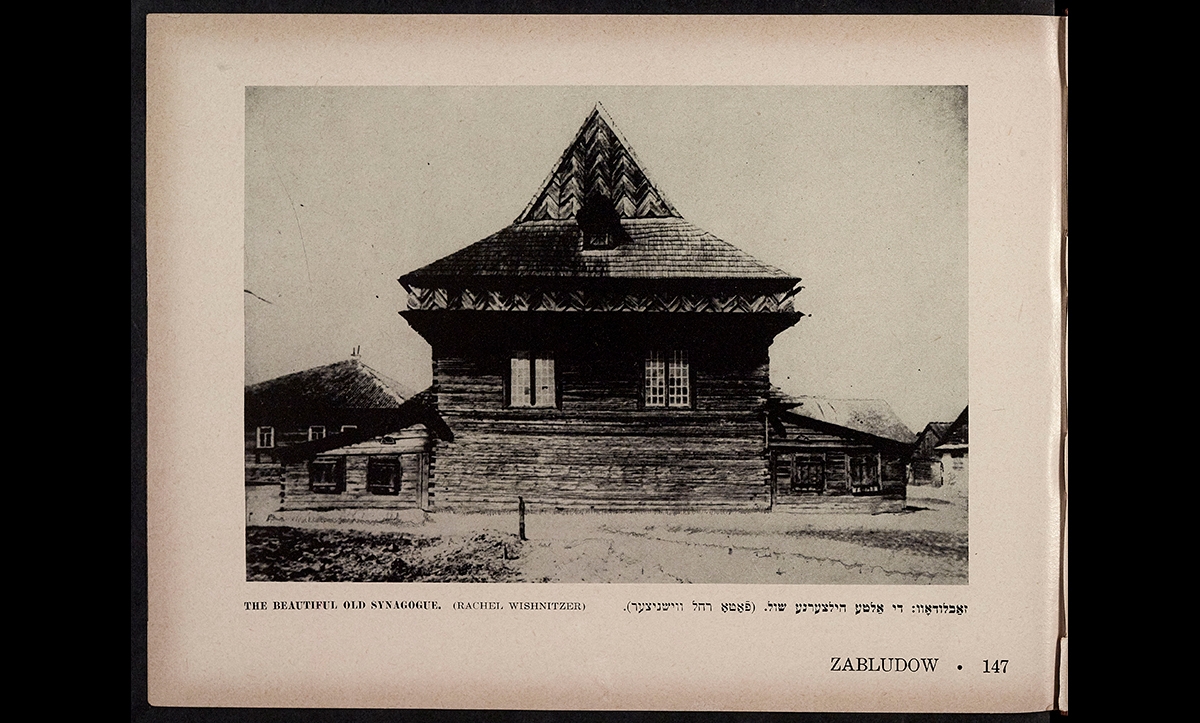
Shtetls had all the essential Jewish community institutions, including a mikveh , synagogues, cemeteries and schools. They were traditional, so men held all positions of power, but women played key roles in communal life.

Contrary to Jewish life in cities, where Jews were often limited to a small number of jobs, the shtetl had much occupational diversity. Many social classes were also represented, from a wealthier social elite to merchants and artisans, down to ordinary workers and beggars. Still, they were small enough that everyone was known by name.

Shtetl life changed and developed significantly over centuries. Different communities were impacted by the laws of various empires and states they found themselves under based on their location.

In Poland after World War I, Jewish communities experienced rapid urbanisation and many moved away from shtetls, which also led to secularisation and linguistic assimilation. Nevertheless, two out of five of Polish Jews still lived in shtetls in 1939 and shtetl life had become more diverse thanks to new political and social movements. Comparatively, Jews in the new Soviet Union had little political and economic freedom.

For centuries, shtetlach were an integral feature of life in eastern Europe. They were destroyed in the Holocaust.

Politics and culture

Jewish life in Eastern Europe was incredibly rich and diverse, and many cultural, religious and political movements developed in the region over centuries.

For example, Hasidic Judaism or Hasidism, a type of Orthodox Judaism that is still practiced today, originated in an area of modern-day Ukraine in the eighteenth century. There are many different Hasidic groups, each being loyal to a specific spiritual leader known as a rebbe. They usually are named for the eastern European towns where they began.

Jews could participate in non-Jewish politics after they were granted emancipation . Some were drawn to radical movements such as Communism. In certain countries they came to be seen as overrepresented in Communist circles, which meant that non-Jewish opponents to Communism propagated harmful stereotypes such as the myth of Judeo-Communism . This was a pervasive antisemitic belief in Eastern Europe and later Nazi Germany. However, the majority of Jews in Eastern Europe supported Jewish parties.

Numerous Jewish parties were formed, representing beliefs across the political spectrum. They were concerned with communal issues such as assimilation, secularisation and antisemitism, as well as traditional political questions.

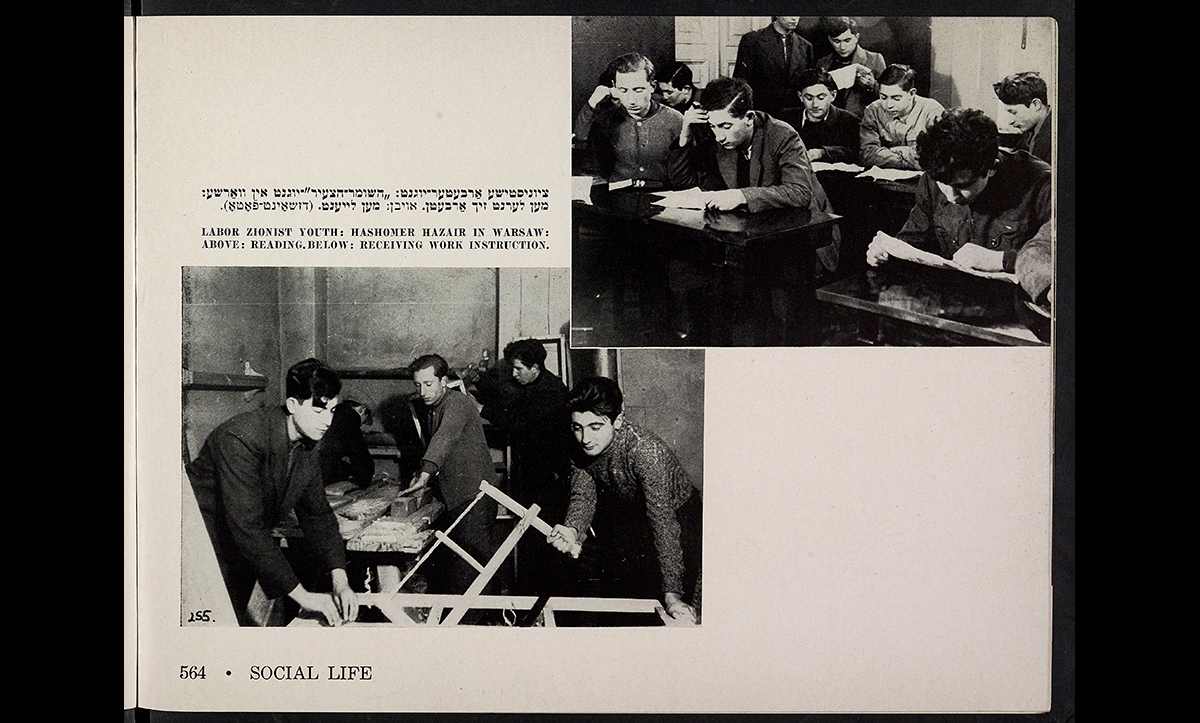
From the end of the nineteenth century, many Jewish political parties in Eastern Europe were Zionist . There were many different types of Zionism that had different visions for a Jewish state based on different political ideas, such as left-wing Zionist groups that advocated for a socialist Jewish state. Zionist parties also promoted Hebrew language and culture.

Another Jewish political movement was the Bund, the dominant anti-Zionist organisation. Doiykait (Yiddish for ‘hereness’) was the movement’s trademark principle, stating that Jews should invest in their communities wherever they resided. After World War I, Poland became the movement’s centre, where Bundist groups played a central role in organising Jewish trade unions and Yiddish education.


Erich Schulhof

Erich Schulhof was born on 16 July 1909 to Charles and Ida Schulhof (née Pick) in Olomouc, Czechoslovakia. Erich had one older sister, Else.

After attending school, Erich completed an apprenticeship before undertaking military service with the Czech army in 1929. He then returned to the family business where he became the manager of his uncle’s leather goods factory in Prague. In his spare time, Erich was a keen and skilled musician. He was extremely interested in foreign languages and became fluent in four: German, Czech, French and English.

Following the Nazi invasion of Czechoslovakia in 1939 and the subsequent implementation of their racial laws, Erich was no longer able to work for the family business in Ostrava and relocated to Prague in order to find new employment.

On 24 November 1941, Erich was transported to the Theresienstadt Ghetto. Two years later, on 18 December 1943 he was deported to Auschwitz, where, after a period of forced labour, he was murdered.

Erich’s father, Karl Schulhof, died from a heart attack in 1939. His mother Ida Schulhof was reunited with Erich after being sent to the Theresienstadt Ghetto on 4 July 1942. After thirteen months of imprisonment, Ida was deported to Auschwitz on the same transport as Erich, and was murdered on arrival.

Erich’s older sister Else married Hans Briess in 1929. In 1939, the couple were able to escape the Nazi occupation of Czechoslovakia and emigrate to England with their two children, Peter and Hana Briess. Of Erich’s immediate family, they were the only members to survive.

Gerty Simon

Gerty (Gertrud) Simon (1887-1970) was a successful and well-regarded photographer from Berlin. Simon lived in the city with her husband, Wilhelm Simon (1885-1966), an assistant judge and senior lawyer, and her son Bernard (Bernd) (1921-2015).

In Berlin in the 1920s and 1930s, Simon had many prominent and notable subjects, such as Albert Einstein, Alfred Kerr and his daughter Judith Kerr, and Käthe Kollwitz. Simon was part of the thriving cultural scene in Berlin and photographed many of its leading lights such as actress Lotte Lenya and artist Renée Sintenis.

When the Nazis rose to power in 1933, Simon found herself at particular risk of persecution, because of  her religion (she was a Jew) and because  many of the people that she photographed were socialists or anti-fascists who were opposed to  the Nazis. Gerty Simon emigrated to Britain in 1933 with her son Bernard, whose school had also been relocated.

Once in Britain, Simon quickly re-established herself and continued to photograph high-profile individuals such as the actress Peggy Ashcroft and politician Aneurin Bevan. On 13 November 1934, just over a year after she emigrated to Britain, Simon’s work formed an exhibition at the Storran Gallery in London entitled London Personalities.

Wilhelm Simon stayed in Berlin in 1933 following his wife and son’s emigration. However, he was persecuted by the Nazis as a Jew  and reduced to working as a notary. In 1938, following a period in hiding after Kristallnacht, Wilhelm Simon was able to escape Nazi Germany and he joined Gerty and Bernard in London. Wilhelm Simon died in 1966, Gerty Simon died four years later in 1970.

Hörst Jaslowitz

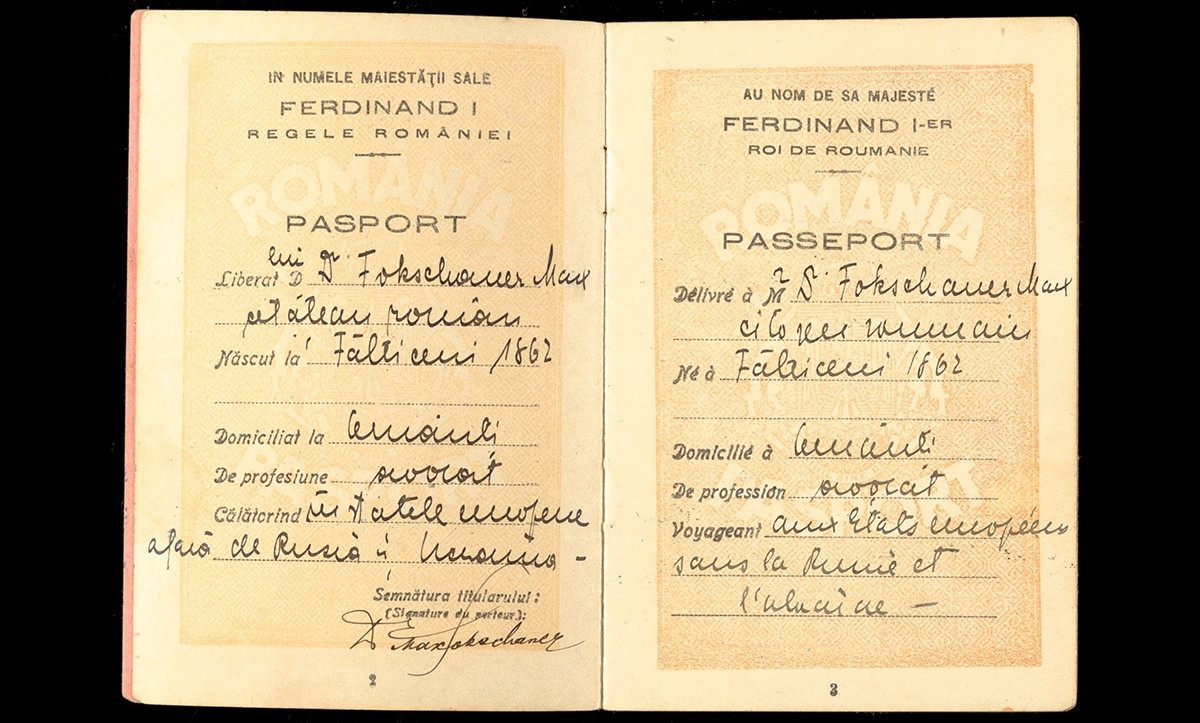
Hörst Jaslowitz (later Harry Jarvis) was born in Cuciurul-Mare, a small village in the north of Romania, to Adolf and Lotte Jaslowitz. Hörst had one younger sister, Sonja, who was born on 6 April 1927. The Jaslowitz family were upper class, well-educated, German-speaking Jews. Both Lotte and Adolf had attended university and there was a large library in their house in Cuciurul-Mare, where Lotte and Adolf regularly entertained friends. In 1932, the Jaslowitz family moved to the nearby city of Czernowitz (now known as Czernowitzi).

As  fascism increased in popularity and  antisemitism intensified, Hörst was sent to study in England in 1938. The following summer, Adolf and Lotte visited Hörst (who now became known as Harry) in England, but during their visit the Second World War broke out and they returned to Romania to be with Sonja, who had been left in the care of family.

During the war, Sonja, Lotte and Adolf were deported from their homes and imprisoned in two different camps and a ghetto before being released in 1944. Shortly after their release, however, Sonja was killed in a British bombing raid on Bucharest, and Adolf died from tuberculosis . Following her daughter and husband’s death, Lotte joined her son Harry in England where she studied law, and was called to the bar on 10 February 1959. She died in 1984.

On his arrival to England in 1938, Harry applied to university and became a doctor. He worked in the National Health Service (NHS) for forty-five years as an anaesthetist, and had two children, Allam and Ruth.

Throughout this time, Harry worked tirelessly to remember the community of Czernowitz, reconnect members of his family that had been scattered over the world, and remember and ensure a legacy for his younger sister, Sonja. Harry died in 2014.

Margarete Wiener

Margarete Wiener (née Saulmann) was born in 1895 in Hamburg, Germany, to Louis and Clara (née Cohn) Saulmann. Margarete had one sister, Gertrud, known affectionately as ‘Nuti’. After leaving school, Margarete continued her studies at the University of Freiburg, where she obtained a PhD in economics in 1921.

Shortly afterwards, Margarete moved to Berlin where she met and married Dr. Alfred Wiener. The couple had four children: Carl, born in 1922, Ruth, born in 1927, Eva, born in 1930, and Mirjam, born in 1933. In 1928, Carl died from appendicitis aged just six.

Margarete was a formidable academic. She published acclaimed papers scrutinising the Nazis’ economic policy and highlighting the dangerous  antisemitic nature of the party, and also held a leading position in the Union of Women Economists.

As staunch anti-Nazis, the Wieners foresaw the danger of the Nazis’ rise to power earlier than most. In 1933, they emigrated to Amsterdam with their three young daughters and Alfred’s mother, Amalia. The Wieners were joined in Amsterdam by Margarete’s sister and brother-in-law, Gertrud and Jean Abraham, and their son Fritz. Ruth, Eva and Mirjam began school, and, shortly after their arrival, Alfred Wiener founded the Jewish Central Information Office (JCIO) – the predecessor to The Wiener Holocaust Library. The Wiener family lived in the apartment above the JCIO, and, as the years passed, settled into life in Amsterdam.

In 1939, with the outbreak of the Second World War imminent, Alfred Wiener relocated the JCIO to London. Margarete and the three girls, who had been due to follow Alfred, were trapped in Holland at the time of the German invasion in May 1940. On 20 June 1943, Margarete, Ruth, Eva, and Mirjam as well as Gertrud, Jean and Fritz were detained by the Nazis and sent to Westerbork transit camp . Margarete, Ruth, Eva and Mirjam were imprisoned in Westerbork for seven months until January 1944, after which they were deported to Bergen-Belsen . After a year in the camp, in January 1945, the family were chosen for a rare opportunity to be part of a prisoner exchange scheme between Germany and the United States and were placed on a train to Switzerland – where they finally regained their freedom.

Shortly after crossing the border, Margarete, whose health had slowly deteriorated over the course of their imprisonment, was too ill to continue travelling. On 25 January 1945, she was taken into a Swiss hospital where she died just a few hours later.

Susanne Medas

Susanne Johanna Bernstein was born in Berlin in 1923 to Richard and Gisela Bernstein. She had one older brother, Adolf Heinrich Bernstein. The Bernstein family were middle-class and socialist . Susanne’s father Richard was from Vienna and worked as the political editor of the Social Democratic weekly newspaper Vorwaerts. Susanne’s mother was Czech.

In 1927, when Susanne was five years old, doctors found a potential shadow on her lung and feared she was suffering from tuberculosis . To recover, Susanne was sent to live with a family friend in the Italian Alps for a year, returning to Berlin in September 1928 to start school. As a child, Susanne was very independent, and enjoyed spending summer holidays with her maternal aunt and uncle in Czechoslovakia.

In 1933, the Nazis’ rise to power meant that the Susanne, Adolf and her parents relocated to Prague, where Susanne joined the leftist youth movement the ‘Red Hawks’.

In 1938, Heinz Bernstein travelled to England and tried to arrange for Susanne to follow. In June 1939, after unsuccessful attempts to gain visas for the rest of the family to enter the United States, sixteen-year-old Susanne was sent on one of the Kindertransport trains from Prague organised by Nicholas Winton .

During the war, Susanne attended teacher-training college. After the war, Susanne went on to work for Bloomsbury House , helping Jewish refugee children, before undertaking a career in education. Susanne later married, changing her surname to Medas.

In August 1939, Susanne’s parents, Gisela and Richard, managed to move to Oslo in Norway. At the beginning of 1941, Richard was detained at Grini concentration camp for one year. In the summer of 1942, Richard was re-detained in Grini alongside Gisela. In November 1942, Gisela was taken to  Auschwitz where she was murdered soon after her arrival. Richard was also taken to Auschwitz. He died in 1943.

Susanne Medas died on 16 June 2016.

Ludwig Neumann

Ludwig Valentin Neumann was born in Essen on 22 May 1896 to Emil and Dina Neumann. Ludwig had one sister, Liesel. The Neumann family were upper-class  assimilated German Jews. Emil Neumann had co-founded the successful industrial clothing company Neumann & Mendel with Carl Mendel in 1889, and inherited the business following Mendel’s death shortly afterwards.

After growing up in Essen, Ludwig Neumann fought with the German Army during the First World War, where he was injured and received an  Iron Cross for his bravery. After the war, Neumann studied at the technical Institute for Textile Industries in Württemberg between 1919 and 1920, and following his father’s death in 1923, successfully managed the family clothing business, Neumann and Mendel.

Neumann led the business until 1938, when, as a result of the Nazis ‘ aryanisation ’ laws, he was forced to sell the Neumann and Mendel company, which was subsequently taken over by Nazi supporter Joseph Herbring. In late 1938, Neumann was forcibly detained by the Nazis in Dachau concentration camp . Neumann was released from Dachau after a few weeks’ imprisonment on the condition that he leave Germany immediately.

Neumann emigrated to Britain, where during the Second World War he worked as the manager of several firms in the clothing industry. In 1940, Neumann was briefly interned as an enemy alien on the Isle of Man, after which he joined the Home Guard in the British Army.

In 1950, Neumann returned to Germany to resume management of Neumann & Mendel, but the business had suffered under the management of Herbring and as a result of the war. In 1954, the machinery was sold and the business was closed. Neumann returned to Britain, where he settled.

What happened in October