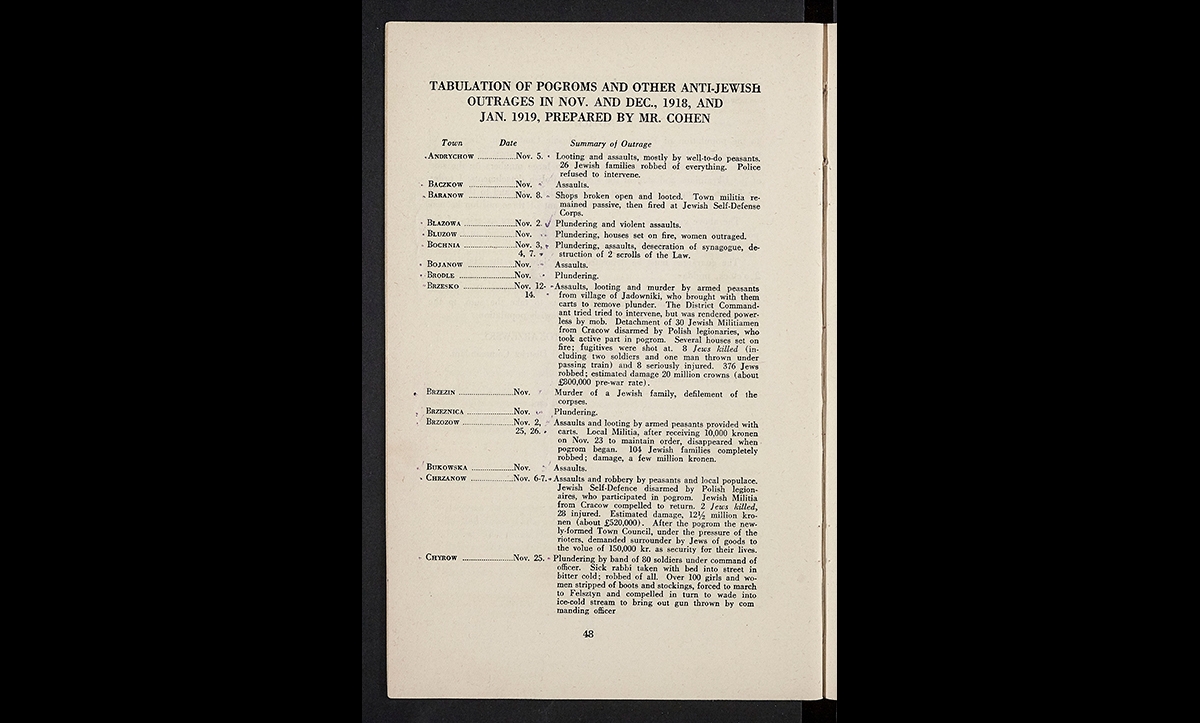
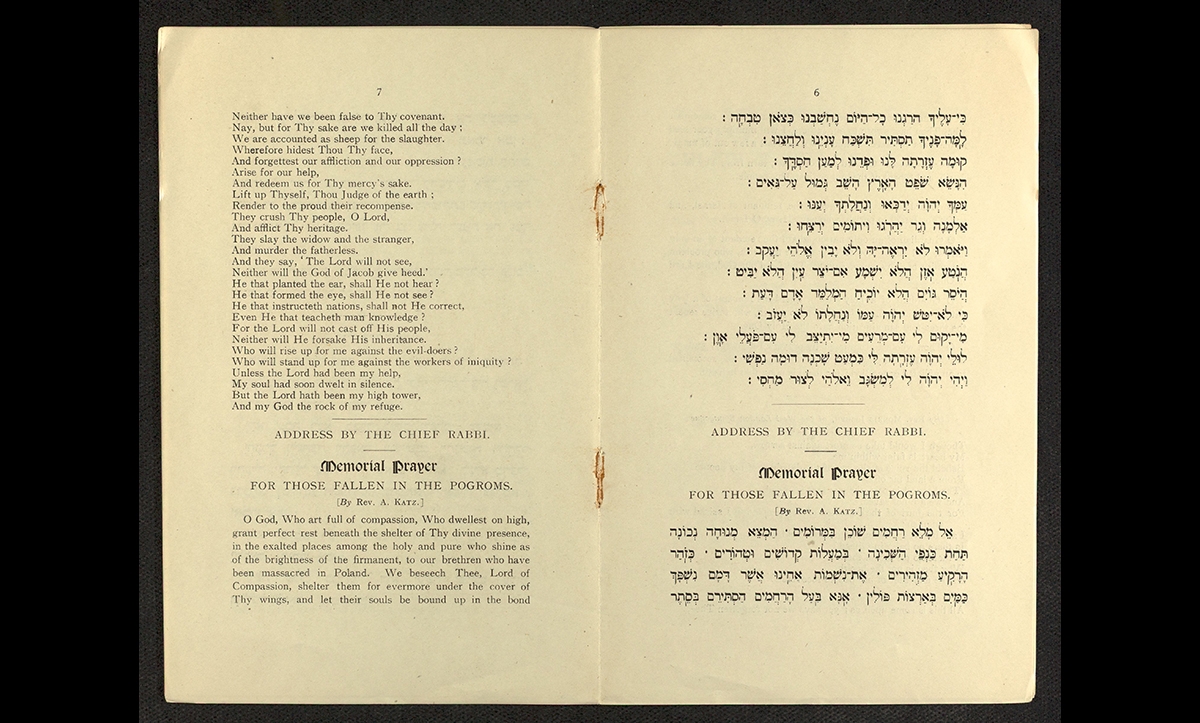
A pogrom is an outbreak of mass violence directed against a minority religious or ethnic group, most often referring to attacks against Jewish communities. The term has Russian origins and gained widespread usage during the outbreak of anti-Jewish violence in the Russian Empire in the 1880s. Anti-Jewish pogroms occurred in frequent waves in Eastern Europe in the nineteenth and twentieth centuries, specifically in the borderlands of the Austrian, German and Russian Empires.
Pogroms can be hard to define. Different events that have been referred to as pogroms vary massively in nature, causes, and scale, ranging from riots targeting Jewish property, to violent attacks that today could reasonably be called genocidal.
They most often broke out in
borderlands
regions with diverse ethnic communities. During times of socio-political upheaval, tensions between these communities heightened. Ethnic groups such as Russians, Ukrainians and Poles saw Jews as the cause of their problems due to deep-rooted antisemitism and instigated attacks on their local Jewish community. Once it began, violence could spread quickly through different villages, towns and cities. These pogroms were often met with passivity, and at times encouragement, by local authorities.
The first large wave of pogroms began in the southwest of the Russian Empire (modern-day Ukraine) from 1881-1884. They involved physical humiliation and the
plunder
of Jewish property but mostly stopped short of physical violence.
Pogroms in the early twentieth century were far more deadly. For example, in the 1903 Kishniev Pogrom, 49 Jews were killed, 700 houses burned down, and 600 shops looted within 48 hours.
In 1905-6, there were over 600 pogroms in the Pale of Settlement in what was then the western region of the Russian Empire, largely instigated by labour migrants looking for work. Over 3,000 Jews were murdered, and entire neighbourhoods were destroyed.
Pogrom activity escalated further during World War I (1914-1918) and the Russian Civil War (1919-21). In this period, different national and ethnic armies led brutal attacks of unprecedented scales against Jewish communities, characterised by mass killing and sexual violence. It is estimated over 50,000 Jews were murdered in pogroms during the Russian Civil War.
Pogroms eventually subsided in the areas of the new Soviet Union after 1921 but continued in other areas of Eastern Europe. For example, multiple small attacks occurred in Poland in the late 1930s.
The violence of this era of pogroms would ultimately be overshadowed by the Holocaust.